
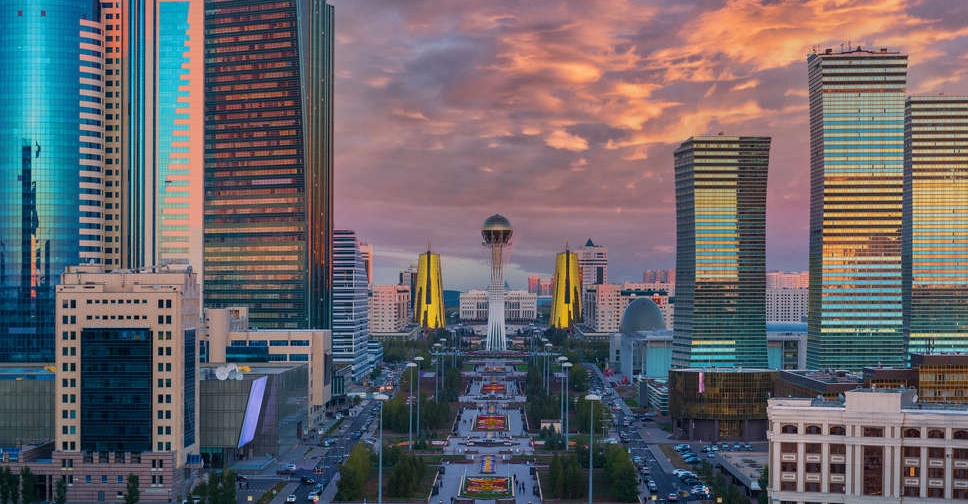
Kazakhstan's parliament renamed the Central Asian nation's capital from Nur-Sultan to Astana on Friday.
It's the latest move by government officials and politicians to distance themselves from the former Soviet republic's first president.
The windswept steppe city infamous for its harsh continental climate became the capital in 1997. It was renamed Astana the following year.
Nursultan Nazarbayev, Kazakhstan's president at the time, said he wanted the capital to be located closer to the geographical centre of the vast nation. The previous capital, Almaty, lies close to its southeastern border.
Billions of petrodollars have since turned the current capital, which was also known as Tselinograd in the Soviet era, into a glitzy metropolis.
In 2019, when Nazarbayev resigned after three decades in power, his successor Kassym-Jomart Tokayev renamed Astana to Nur-Sultan in honour of the ex-leader, who retained sweeping powers after his resignation.
Tokayev, however, appeared to have a falling out with Nazarbayev after violent street protests over fuel prices in January. Nazarbayev gave up his remaining positions and many of his relatives lost their public sector jobs.
On Friday, Kazakhstan's parliament voted to revert to the name Astana by changing the country's constitution. It also extended the presidential term to seven years from five and barred incumbents from running for a second term.
The change will not stop Tokayev, elected under an earlier version of the constitution, from running for a second term in an upcoming election, but will extend his second term if he wins the vote.


 Explosion kills 6, injures 10 in Vietnam capital Hanoi
 Pakistani pilot to become first foreigner to fly to China's space station
 Sheikh Hasina seeks to return to Bangladesh on December 16 on state carrier
 Israeli airstrikes kill at least six Palestinians in Gaza, medics say
 Israeli airstrike kills at least 3 Palestinians in southern Gaza, medics say