

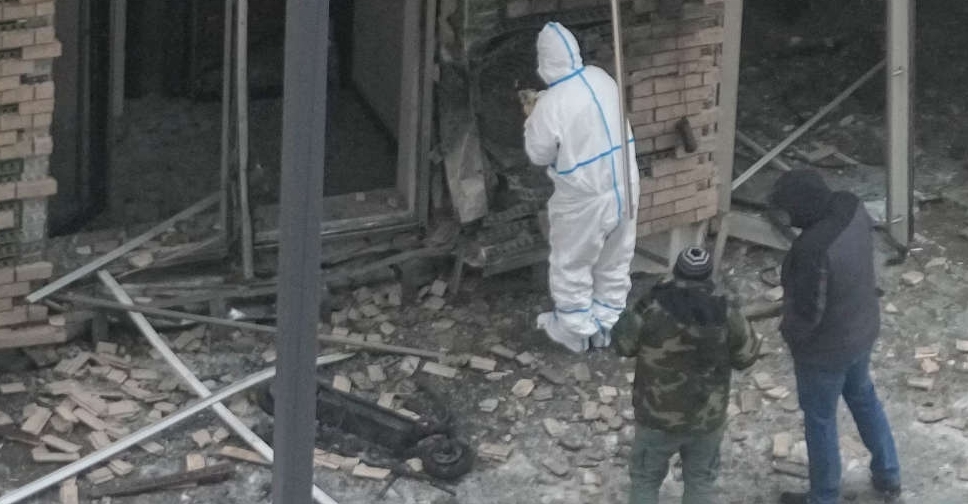
Russia said on Wednesday it had detained a citizen of Uzbekistan who had confessed to planting a bomb which killed Lieutenant General Igor Kirillovin Moscow a day earlier on the instructions of Ukraine's security service.
Kirillov, who was chief of Russia's Nuclear, Biological and Chemical Protection Troops, was killed outside his apartment building along with his assistant when a bomb hidden in an electric scooter went off.
He was the most senior Russian military officer to be assassinated inside Russia by Ukraine. Ukraine's SBU intelligence service, which accused Kirillov of being responsible for the use of chemical weapons against Ukrainian troops, something Moscow denies, took responsibility for the killing.
Russia's Investigative Committee, which probes serious crimes, said in a statement on Wednesday that the unnamed suspect had told them during questioning that he had come to Moscow where he had received an improvised explosive device for the hit.
The statement said he had described how he had placed the device on an electric scooter which he had parked outside the entrance of the apartment block where Kirillov lived.
Investigators cited him as saying that he had set up a surveillance camera in a hire car nearby and that the organisers of the assassination, who he said had been based in the Ukrainian city of Dnipro, had used the camera to track Kirillov and remotely detonated the device when he had left the building.
The statement said the suspect, who was born in 1995, had been offered $100,000 for his role in the murder and residency in a European country.
Investigators said they were identifying other people involved in the hit and the daily Kommersant newspaper reported that one other suspect had been detained. Reuters could not independently confirm that.

 Israel to allow international force into Gaza, Israeli official says
 Philippines' Marcos puts anti-graft campaign at centre of address to Congress
 Firefighters battle blazes near France's Bordeaux, Macron in crisis talks
 India suspends policeman for firing weapon at student protesters
 Kuwait strongly condemns repeated Houthi attacks on ships in Red Sea