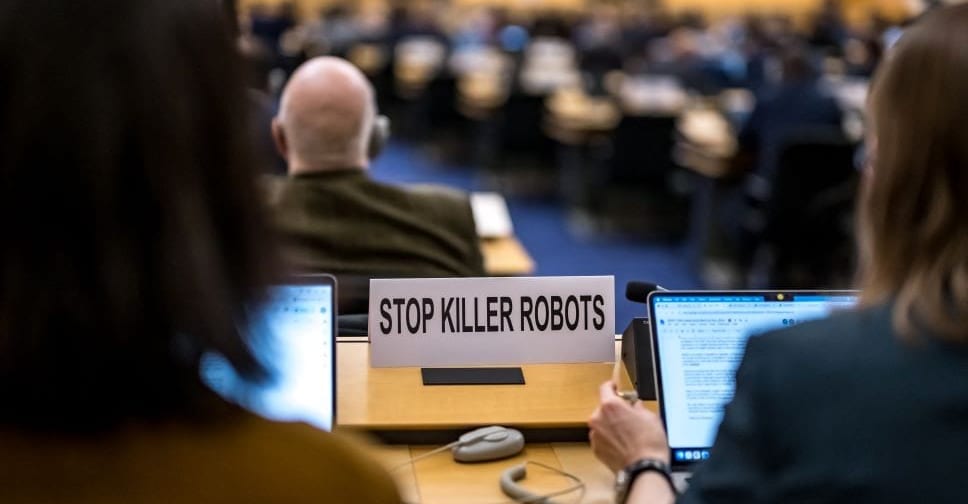
UN talks on regulating weapons with little or no human oversight ended on Saturday with a pledge for further discussions to develop new rules within two years, an outcome weakened by opposition from Russia that fell short of rights groups' hopes.
Proponents had called for legally binding rules within a short timeframe to regulate weapons systems that can identify and engage targets with varying degrees of autonomy, sometimes called "killer robots".
Around 100 countries backed this position but big arms-producing nations like the US, Russia and Israel opposed this, resulting in a watered-down agreement that left open the question of whether future measures would be legally binding.
"In the end, the military powers managed to impose many obstacles to the objective of a protocol, but at least it remains a possibility, and with a short-term mandate," said a diplomat who attended the talks that concluded past 4 a.m. (0300 GMT) in Geneva.
The 128 member states of the Convention on Certain Conventional Weapons had been meeting since Monday as alarm grows over the use of lethal autonomous weapons systems in conflicts, including in Ukraine, Sudan and the Middle East. The UN secretary-general, the Pope and the Red Cross have all called for strong and legally binding rules.

 COP31 climate talks break down as EU, others reject deal
 Indonesia factory fire search to resume Monday as 24 body bags recovered
 Libya suspects drone attack caused Benghazi ship explosion
 India food regulator to take Bisleri to court over unsafe water sample
 Israel's Eisenkot condemns arson attacks by settlers in West Bank