
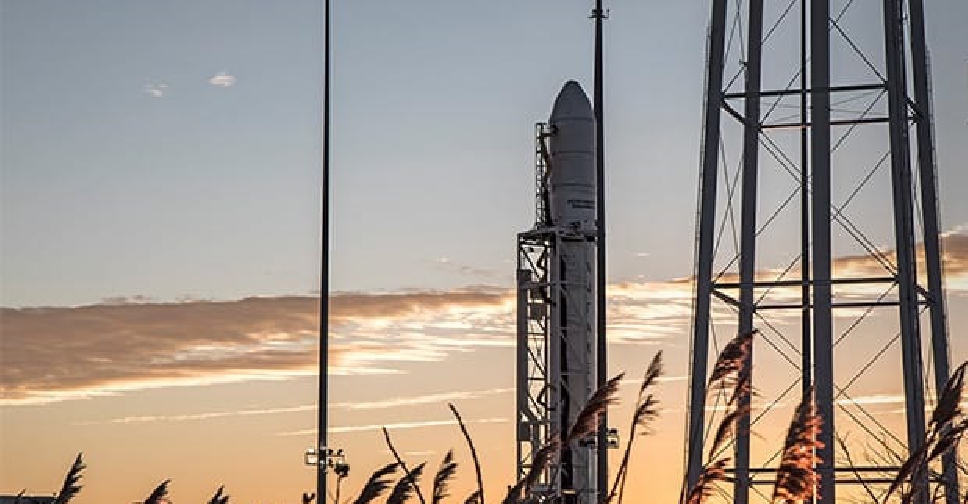
Another milestone has been acheived in the UAE's space sector with the launch of the DhabiSat satellite.
It successfully lifted off on Saturday from the Wallops Flight Facility in the US state of Virginia aboard the Cygnus NG-15 craft on the Antares rocket bound for the International Space Station.
The satellite has been developed by students from Khalifa University's Space Technology and Innovation Centre's Yahsat Lab in collaboration with Northrop Grumman and the UAE Space Agency.
DhabiSat will enable the team to test custom software modules, developed in-house for the Attitude Determination and Control Subsystem.
Its high-res camera can capture images at 12.6 metres per pixel spatial resolution on ground, from an altitude of 450 km.
The satellite also has the potential to improve the efficiency of future CubeSats.
"The launch of DhabiSat is another remarkable achievement for the UAE, Khalifa University and the partners, marking a major milestone for the UAE’s space sector that will have locally-qualified, and trained manpower equipped by academic institutions within the country," said Dr Arif Sultan Al Hammadi, Executive Vice-President, Khalifa University of Science and Technology.
"This CubeSat was entirely designed and developed by students with support from our partners, and demonstrates another example of Khalifa University’s overarching strategy to develop space scientists and engineers who will take the UAE forward in terms of technological progress.
"We believe DhabiSat will stand testimony to our commitment to developing dedicated human capital through our exclusive academic programs, our research center KUSTIC and with the support of our collaboration partners."
Khalifa University’s first CubeSat MYSat-1, conceptualised, designed, integrated, tested and operated as part of the Master’s Concentration in Space Systems and Technologies programme, was deployed in February 2019.
It carried an experimental coin cell battery, based on the technology developed at Khalifa University along with a VGA camera integrated at the Yahsat Space Lab based on commercial off-the-shelf (COTS) components.
.
— جامعة خليفة للعلوم والتكنولوجيا (@KhalifaUni) February 20, 2021
نبارك لقيادة وشعب دولة الإمارات العربية المتحدة الإطلاق الناجح لـ #ظبي_سات، القمر الاصطناعي المصغر الذي تم تصميمه وتطويره من قبل طلبة #جامعة_خليفة وبدعم من @yahsatofficial و @northropgrumman
و @uaespaceagency
إنجاز جديد يعزز من مكانة دولة #الإمارات في قطاع الفضاء. pic.twitter.com/t4B32zDy90


 Gargash: ADNOC tankers' targeting will not deter UAE from moving forward
 Dubai Customs foils attempt to export over 70 million illicit cigarettes
 UAE expresses support for Indonesia after deadly earthquake
 ADNOC confirms attack on vessel in Strait of Hormuz
 UAE commends Kuwait’s vigilance in foiling terrorist plot
 Public invited to help shape UAE gender balance strategy
 UAE strongly condemns Iranian attack on ADNOC vessels
 Arab nations condemn Iranian attack on ADNOC tankers
 Abu Dhabi shuts down cafe over food safety violations
 Dubai Police warn of cyber threats on gaming platforms
 UAE allocates $10 million for Colombia earthquake relief
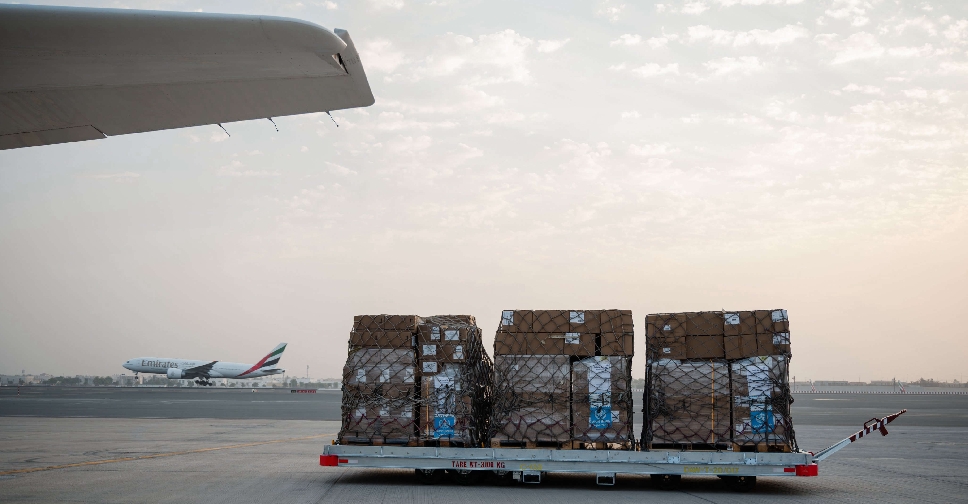 Dubai Humanitarian launches air bridge to deliver vital aid to Gaza
 UAE reaffirms solidarity with Colombia after earthquake
 Dubai Fitness Challenge returns for another exciting edition
 UAE President, King of Bahrain discuss stronger ties and regional stability
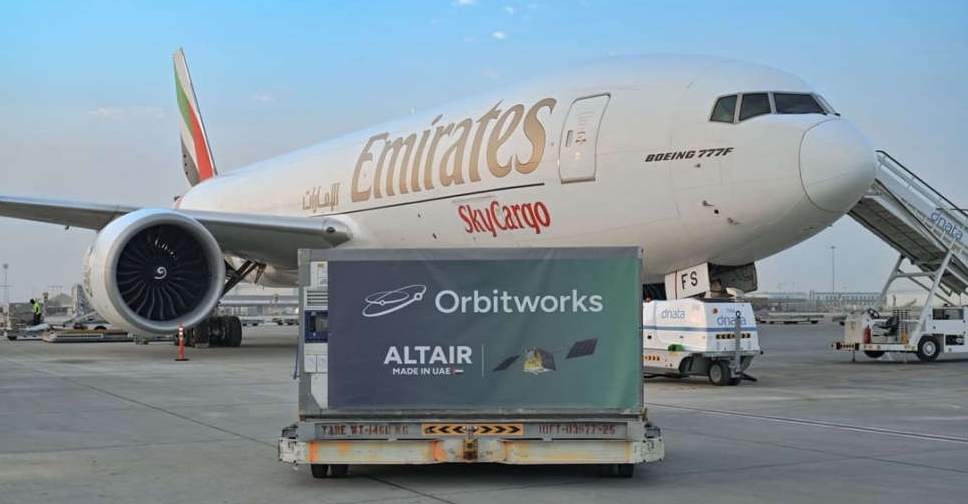 UAE-built AI satellite Altair-1 heads to US ahead of October launch
 New bridge to cut travel time from DWTC to Al Mustaqbal Street
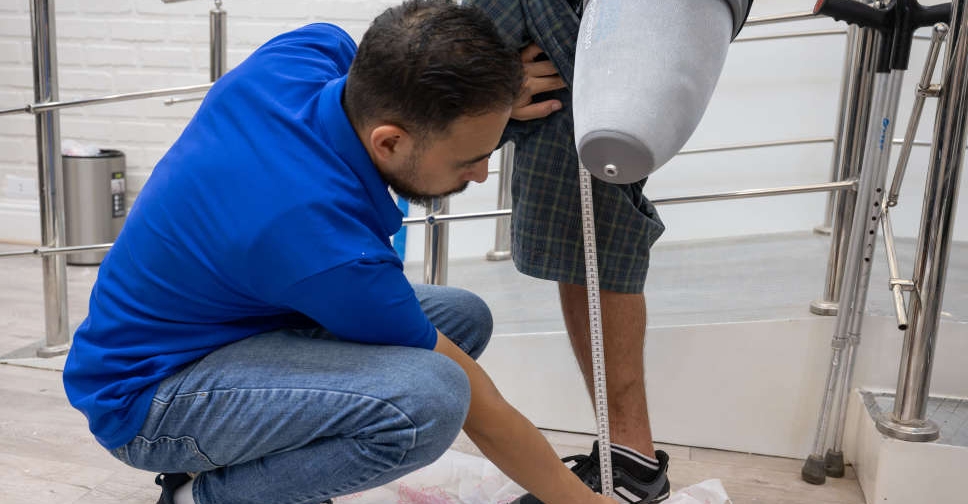 UAE Floating Hospital fits prosthetic limbs for 21 more Palestinian amputees
 UAE, DR Congo Presidents discuss strengthening cooperation under CEPA

