
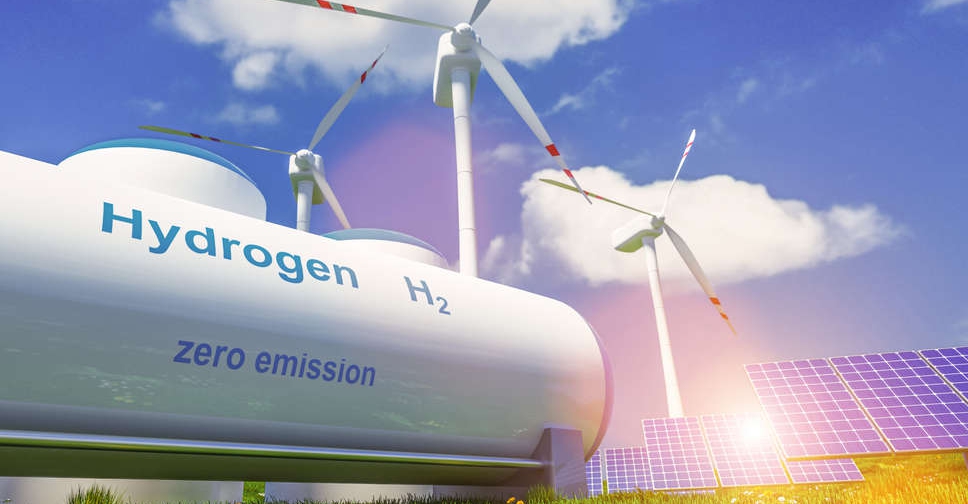
Abu Dhabi's Department of Energy (DoE) is developing a low-carbon hydrogen policy and regulatory framework in partnership with key government and private entities.
The move aims to accelerate the UAE’s national hydrogen strategy and position Abu Dhabi as a leader in the production and usage of hydrogen worldwide.
Locally produced hydrogen will also act as a driver of innovation and economic diversification, allowing for the decarbonisation of the economy.
The policy, to be published before the end of 2022, will support the increase of low-carbon hydrogen production in Abu Dhabi to more than 1 million tonnes per annum by 2030 and help double the clean energy sector’s contribution to the total energy mix to 50 per cent by 2050.
The regulatory framework will clearly define policies, regulations, standards, and certifications for the emerging hydrogen industry to be globally competitive.
Due to the nature of the industry, its wide target markets, emerging industrial forms and functions, growth characteristics of demand, and deeply technical components, a policy and regulatory framework is essential.
The DoE is working with key Abu Dhabi government and private sector stakeholders including ADNOC, Mubadala, Masdar, ADQ, TAQA, Emirates Water and Electricity Company, Abu Dhabi Ports, Ministry of Infrastructure and Energy, Department of Economic Development, Department of Municipalities and Transport, Department of Finance and Environment Agency – Abu Dhabi.
.@AbuDhabiDoE is developing a low-carbon hydrogen policy and regulatory framework in collaboration with key government and private sector partners to accelerate the UAE’s national hydrogen strategy and cement #AbuDhabi as a prominent player in the hydrogen market. pic.twitter.com/XSb4Ctquug
— مكتب أبوظبي الإعلامي (@ADMediaOffice) August 22, 2022
Hydrogen production in the UAE
In Abu Dhabi, hydrogen production is underway as a feedstock for ammonia and industrial processes.
However, this is mainly grey hydrogen, for which production relies on natural gas.
ADNOC has announced plans to increase its carbon capture capacity five-fold from 800,000 tonnes to five million tonnes by 2030.
This will make Abu Dhabi one of the world’s lowest-cost and largest producers of blue hydrogen.
Abu Dhabi advantage in green hydrogen production
With its abundance of land, water and solar electricity, Abu Dhabi is committed to being a global supplier of green hydrogen.
The DoE’s policy and regulatory framework addresses the issue of how the emirate will produce green hydrogen at a large scale.
Many sectors, government departments, ministries, and international bodies are parties of interest that have a stake in hydrogen production and adoption.


 Gargash: ADNOC tankers' targeting will not deter UAE from moving forward
 ADNOC confirms attack on vessel in Strait of Hormuz
 UAE commends Kuwait’s vigilance in foiling terrorist plot
 Public invited to help shape UAE gender balance strategy
 UAE strongly condemns Iranian attack on ADNOC vessels
 Arab nations condemn Iranian attack on ADNOC tankers
 Abu Dhabi shuts down cafe over food safety violations
 Dubai Police warn of cyber threats on gaming platforms
 UAE allocates $10 million for Colombia earthquake relief
 Dubai Humanitarian launches air bridge to deliver vital aid to Gaza
 UAE reaffirms solidarity with Colombia after earthquake
 Dubai Fitness Challenge returns for another exciting edition
 UAE President, King of Bahrain discuss stronger ties and regional stability
 UAE-built AI satellite Altair-1 heads to US ahead of October launch
 New bridge to cut travel time from DWTC to Al Mustaqbal Street
 UAE Floating Hospital fits prosthetic limbs for 21 more Palestinian amputees
 UAE, DR Congo Presidents discuss strengthening cooperation under CEPA
 UAE leaders highlight youth's role central to nation's future
 UAE highlights flexible, skills-based education model at BRICS meeting

