
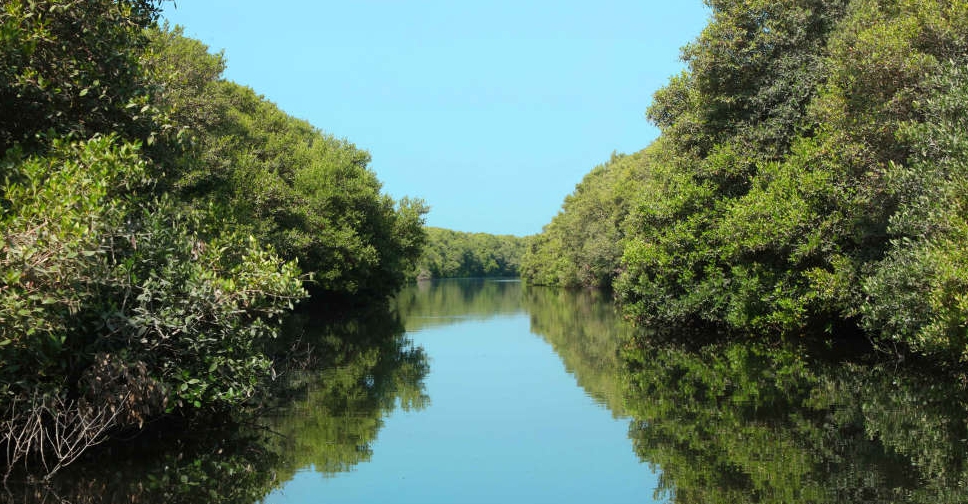
The Ministry of Climate Change and Environment (MOCCAE) launched the roadmap for the National Carbon Sequestration Project, which aims to plant 100 million mangroves by 2030 at the national level.
The move comes as part of UAE's efforts to implement the strategic initiative to achieve Net Zero by 2050.
The announcement came during the second UAE Climate Change Council meeting, held on Jubail island in Abu Dhabi, and included a field tour for the Council members of the mangrove sites in Jubail Park.
The project is part of the strategic directions of the UAE to increase reliance on nature-based solutions in facing environmental challenges and to enhance efforts to capture carbon dioxide to mitigate the effects of climate change and to improve adaptation capabilities.
Mariam bint Mohammed Almheiri, Minister of Climate Change and the Environment, said: "Strengthening climate action efforts and achieving net zero by 2050 represents a strategic priority for the UAE, and it is being implemented through partnership, coordination and cooperation between the government and private sectors to adopt solutions that support reducing and offsetting emissions. To advance and accelerate this cooperation, we focus on nature-based solutions to achieve two important benefits; contributing more effectively to achieving net zero and strengthening efforts to protect ecosystems and biodiversity."
"Through the expansion of mangrove forest areas at the national level, the National Carbon Sequestration Project in the UAE is one of the most effective nature-based solutions in facing the challenge of climate change because of its many environmental benefits. Therefore, the country – thanks to the vision of the wise leadership – raised its ambition regarding the targeted number of mangroves from 30 to 100 million trees by 2030," she added.
The National Carbon Sequestration Project roadmap includes four activities: evaluating mangrove planting sites, producing mangrove seeds and seedlings, a program for planting seeds and seedlings in selected sites, and monitoring and following up on planted mangroves and the levels of carbon that will be captured.
To enhance efforts towards achieving this ambitious goal by 2030, the MOCCAE is working with its partners within an integrated system to implement project activities through cooperation with the government and private sector institutions and international non-governmental organisations.
Many studies and scientific research indicate the high effectiveness and enormous ability of mangroves to absorb and capture carbon up to four to five times greater than wild tropical rain forests, in addition to being a safe, natural habitat for marine biodiversity, as 80 per cent of global fish populations depends on healthy mangrove ecosystems.


 UAE President, King of Bahrain discuss stronger ties and regional stability
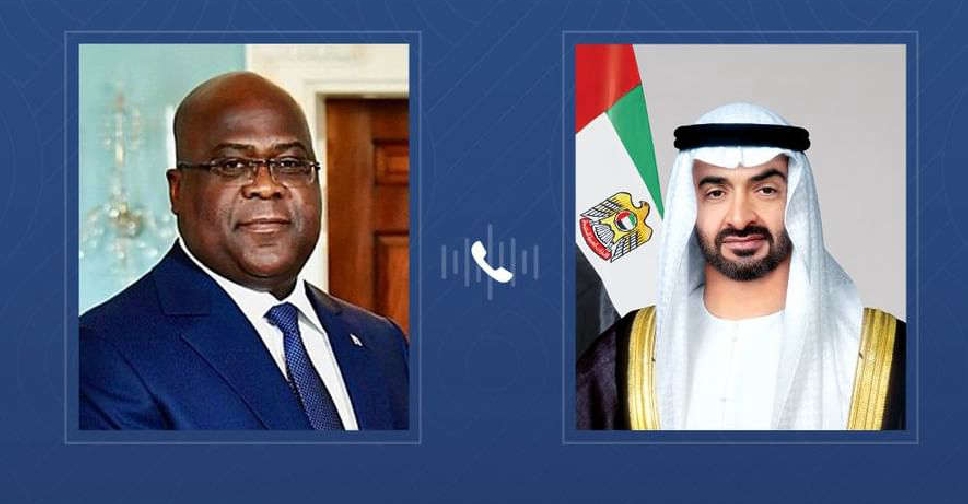 UAE, DR Congo Presidents discuss strengthening cooperation under CEPA
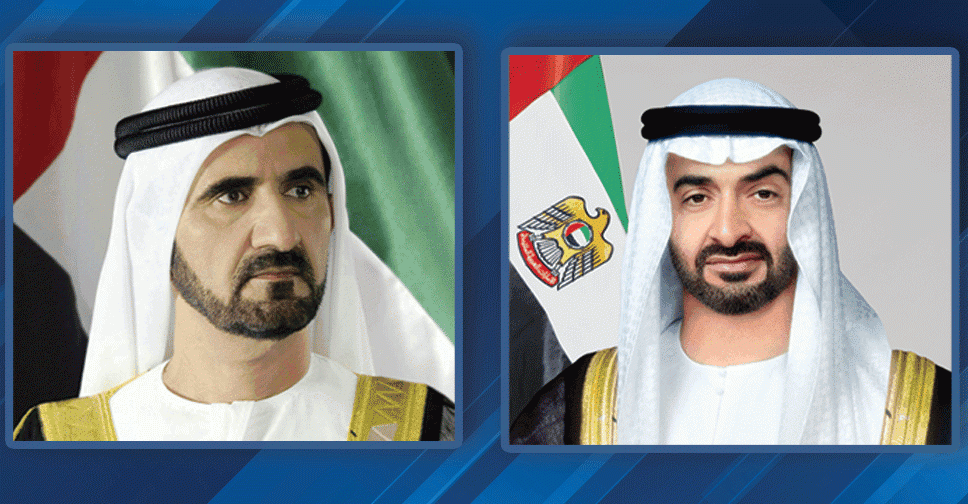 UAE leaders highlight youth's role central to nation's future
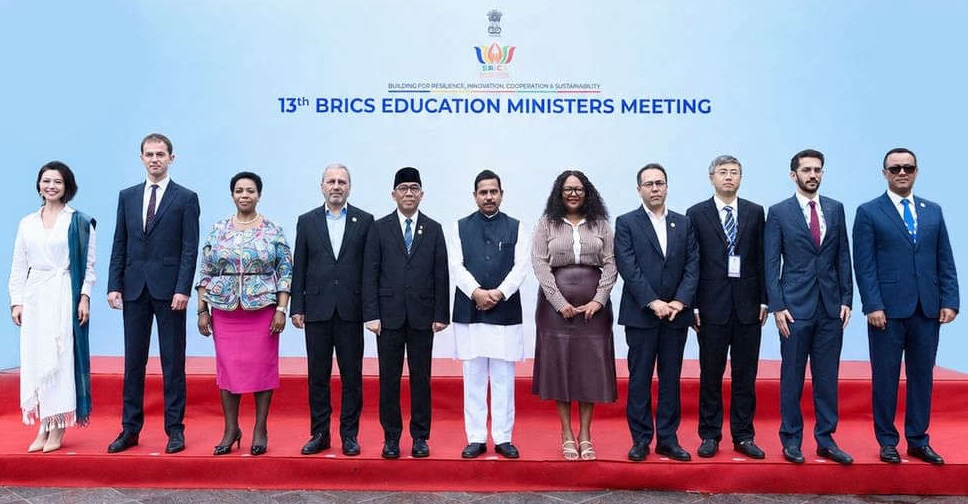 UAE highlights flexible, skills-based education model at BRICS meeting
 Abu Dhabi Customs raises alert over fraudulent messages
 UAE President meets Lulu founder Yusuff Ali during Abu Dhabi store visit
 UAE issues special coins to mark contribution of youth in country's progress
 Sharjah Ruler approves 470 scholarships for new academic year
 UAE continues mobile health clinic operations in Gaza
 UAE expands youth empowerment efforts across key sectors
 UAE authorities seize 3.5 million non-compliant excise goods
 Gargash highlights need to end region's 'indefinite' state
 UAE pays out AED512 million under unemployment insurance scheme
 UAE expresses support for Colombia after deadly earthquake
 UAE thwarts cyberattacks targeting aviation, energy and education sectors
 UAE's post-pandemic hiring recovery among world’s strongest
 UAE Minister of State holds talks with President of Zimbabwe
 New lane on Sheikh Zayed Road to improve access to WTC intersection
 Nominations for first Dubai-it Award open August 10
 UAE convoys deliver 663 tonnes of aid to Gaza

