
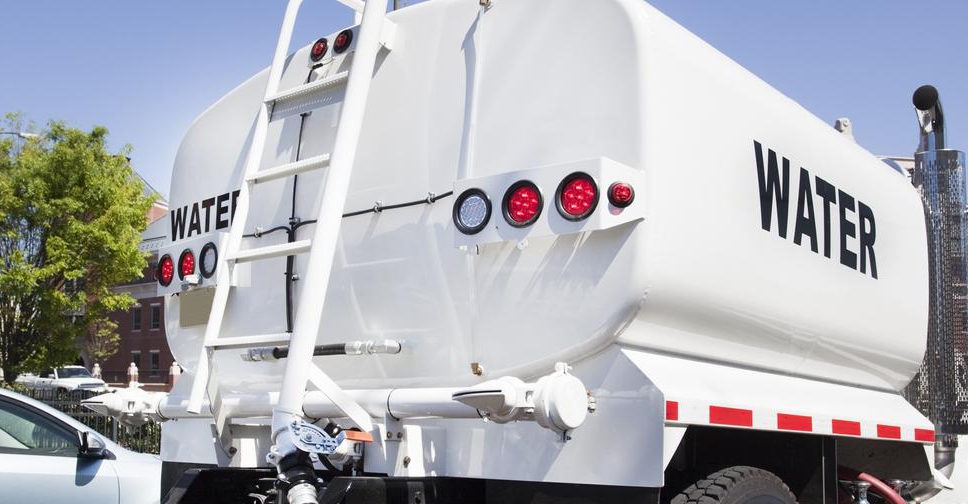
New rules have been drawn up in Abu Dhabi to ensure the quality of water supplies and regulate the collection and transfer of wastewater.
The Tankering Regulations issued by the Abu Dhabi Department of Energy (DoE) are also aimed at protecting the environment and optimising consumption of the country’s water resources and protecting it from wastage.
They cover services of water tankers intended for both drinking and non-drinking water, including desalinated water, recycled water, and groundwater, in addition to wastewater tankers.
The DoE will be working with competent authorities and licensed entities operating in the water sector – mainly the distribution companies and Abu Dhabi Sewerage Services Company, to implement the rules.
Non-compliance with the regulations must be reported to the DoE by all concerned entities and stakeholders.
Penalties range from AED 5,000 to AED 50,000, depending on the violation.
The most notable infringements include:
- Using wastewater, trade effluent or non-drinking water tankers to distribute drinking water
- Operating a tanker without an approval or permit from the responsible entity or using an expired permit or approval
- Discharging wastewater or trade effluent without complying with the standards adopted in the discharge points
- Failure to comply with tanker management services tariffs or costs approved by DoE
- Failure of the responsible entity/person to provide tankering services during emergencies, crises, and disasters, as determined by the Abu Dhabi Department of Energy
The regulations also contain provisions that guarantee the customers’ freedom to choose the service provider they prefer, in an effort to ensure transparency and fairness in competition among service providers.
All tariffs for tankering services where applicable should be submitted by the responsible persons to the responsible entity at least one month before applying for them. The responsible persons should make available their prevailing tariffs for tankering services to the public and potential customers on their websites or other websites with their contact details.
Moreover, the regulations require all tankers to be equipped with a tracking device, allowing the responsible entity to monitor their movement and that of any other equipment necessary for the dispatch of water and/or collection of wastewater.
All drinking/ non-drinking/ wastewater tankers must have appropriate signage stating their intended purpose, where tankers are not permitted to be used for any type of water than the one they were intended for. The Regulations also include a set of requirements for tanker filling stations and wastewater discharge points.


 Gargash: ADNOC tankers' targeting will not deter UAE from moving forward
 Dubai Customs foils attempt to export over 70 million illicit cigarettes
 UAE expresses support for Indonesia after deadly earthquake
 ADNOC confirms attack on vessel in Strait of Hormuz
 UAE commends Kuwait’s vigilance in foiling terrorist plot
 Public invited to help shape UAE gender balance strategy
 UAE strongly condemns Iranian attack on ADNOC vessels
 Arab nations condemn Iranian attack on ADNOC tankers
 Abu Dhabi shuts down cafe over food safety violations
 Dubai Police warn of cyber threats on gaming platforms
 UAE allocates $10 million for Colombia earthquake relief
 Dubai Humanitarian launches air bridge to deliver vital aid to Gaza
 UAE reaffirms solidarity with Colombia after earthquake
 Dubai Fitness Challenge returns for another exciting edition
 UAE President, King of Bahrain discuss stronger ties and regional stability
 UAE-built AI satellite Altair-1 heads to US ahead of October launch
 New bridge to cut travel time from DWTC to Al Mustaqbal Street
 UAE Floating Hospital fits prosthetic limbs for 21 more Palestinian amputees
 UAE, DR Congo Presidents discuss strengthening cooperation under CEPA

