

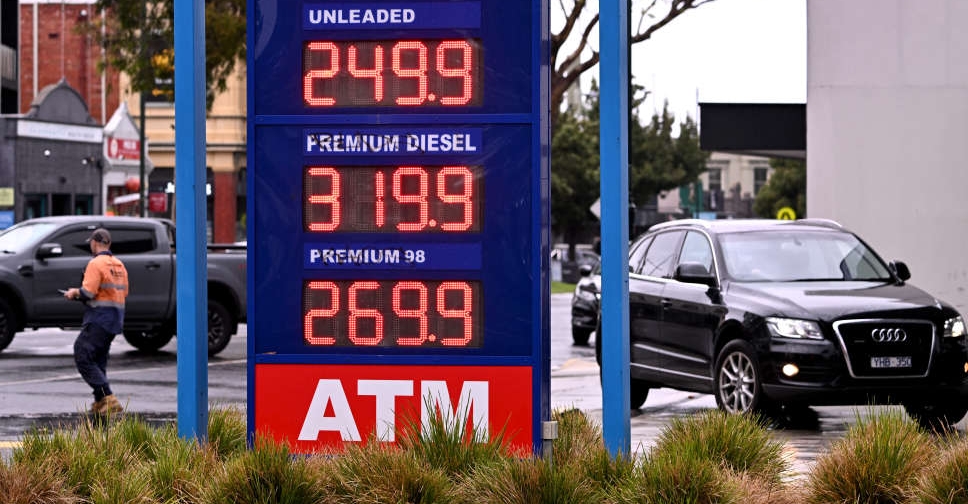
Australian Prime Minister Anthony Albanese has announced on Monday that the government would halve the excise on fuel and diesel and remove the heavy road user charge for three months to help households cope with a surge in costs driven by the Iran war.
Halving the tax would reduce the cost of fuel by 26.3 Australian cents per litre, Albanese said.
The total cost to the government would be about A$2.55 billion ($1.75 billion), Treasurer Jim Chalmers said at a joint press conference with the prime minister and Energy Minister Chris Bowen.
Some 20 per cent of the world's oil was transported through the Strait of Hormuz before the US-Israel war against Iran choked off supplies. The price of Brent has surged 59 per cent in March, the steepest monthly gain in history, and was at $115.66 per barrel when the market opened on Monday.
The measures are the latest in a series of fuel security measures adopted by Canberra since the war began on February 28. It has previously announced the release of petrol and diesel from domestic reserves and the temporary relaxation of fuel quality standards.
The average retail price of a litre of diesel rose to more than A$3 in Australia last week and petrol to A$2.50, according to a March 29 report from the Australian Petroleum Institute.
"We understand the cost pressures for people are very real as the impact of the war on the other side of the world plays out right here," Albanese told the press conference in Canberra.
KEEPING THE COUNTRY MOVING
The government also confirmed it had adopted a national fuel security plan, with all state governments agreeing to work together to deliver fuel to regional areas where it is needed most.
Albanese said there were four levels of action and Australia was at level two, which was to keep the country moving. The highest level would be to ensure critical services were maintained.
“While Australia's fuel supply outlook remains secure in the near term, we need to be very clear as well with Australians that the longer this war goes on, the worse the impacts will be,” Albanese said.
Australia has its highest fuel stocks in 15 years, but they are still far belowInternational Energy Agency recommendations of 90 days.
The latest government numbers as of last week said Australia had enough for 30 days of diesel, 30 days of jet fuel, and 39 days of petrol.
It has also adopted the Export Finance and Insurance Corporation Amendment, which will allow the government to underwrite the purchase of spot cargoes of fuel as prices rise via the credit agency Export Finance Australia.
Bowen said that spot cargoes were available but expensive, and smaller industry players were not able to take the risk.
“These new fuel security powers will put Australia in a strong position, securing fuel supply where it may be cost-prohibitive for private suppliers to source on commercial terms, without government support,” Bowen said in a statement.

 Dubai South awards AED 2 billion contract for development of 'Hayat' project
 Business leaders affirm strength of Dubai's diversified economic model
 WTO advances world’s first digital trade rules despite opposition
 Abu Dhabi boosts transparency, governance in real estate sector
 Dr. Sultan Al Jaber dedicates leadership award to UAE President, frontline workers