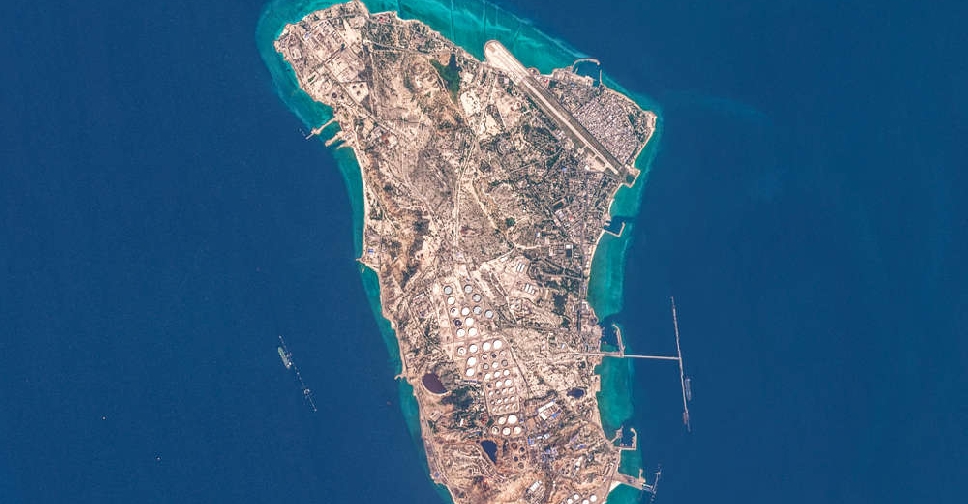
The United States on Friday attacked military targets on Iran's main oil hub of Kharg Island, President Donald Trump said, threatening to strike oil infrastructure on the island if Iran continues to block shipping through the Strait of Hormuz.
In a social media post, Trump said the US military "totally obliterated every MILITARY target" on the island, but he had decided to leave oil infrastructure intact.
The island serves as the export terminal for 90 per cent of Iran's oil shipments and lies about 483 km northwest of the strait.
"However, should Iran, or anyone else, do anything to interfere with the Free and Safe Passage of Ships through the Strait of Hormuz, I will immediately reconsider this decision," Trump said.
Iran had no ability to defend against US attacks, the president added. "Iran’s Military, and all others involved with this Terrorist Regime, would be wise to lay down their arms, and save what’s left of their country, which isn’t much!" he said.
In reponse, the Iranian armed forces said on Saturday that any attack on Iran's oil and energy infrastructure will lead to attacks on energy infrastructure owned by oil companies cooperating with the United States in the region, Iranian media reported.
The US move came as oil prices have been whipsawing on Trump's changing comments on the likely duration of the Iran war, which has prompted Iran to attack vessels in the strait, the conduit for a fifth of the world's oil.
Trump on Thursday issued a temporary waiver for some purchases of sanctioned Russian oil, a move that drew criticism from US allies in Europe for potentially helping Russia fund its war with Ukraine.
Asked when the US Navy will start escorting tankers through the Strait of Hormuz, Trump told reporters on Friday, "It will happen soon."
Trump earlier said Iran's attacks on shipping were "a last-ditch effort." The US would continue to hit Iran "very hard over the next week," he said in a Fox News interview that was recorded on Thursday and aired on Friday.
After nearly two weeks of war, 2,000 people have been killed, most in Iran, but many in Lebanon and a growing number in the Gulf, which has for the first time in decades of Middle East conflicts found itself on the front line.
Several million people have been displaced from their homes. As Israeli warplanes pounded Beirut's suburbs with air strikes, Lebanon's interior minister said authorities were unable to accommodate the hundreds of thousands of people who have sought refuge in the capital.
Israel also dropped leaflets threatening Gaza-scale devastation as it deployed more troops to fight Iran-backed Hezbollah and warned of more attacks on Lebanon's infrastructure.
US forces have also suffered casualties. The US military confirmed that all six crew members aboard a refuelling aircraft that crashed in western Iraq were dead.
Iran fired more missiles and drones at Israel, and Iranian drones were reported flying into Kuwait, Iraq, the United Arab Emirates, Bahrain and Oman.
The Israeli military launched strikes across Tehran. It said its air force had struck more than 200 targets in western and central Iran over the past day, including ballistic missile launchers, air-defence systems and weapons production sites.
The US was sending additional forces to the region, including the USS Tripoli along with its Marine expeditionary unit, two US officials, speaking on the condition of anonymity, said.
The amphibious assault ship, currently in Asia, is capable of carrying fighter jets. In total, 2,500 additional Marines will be sent to the Middle East, along with additional sailors.

 US offers reward for information on Iran's supreme leader, senior officials
 Qatar affirms strategic food and water reserves
 Iran's new supreme leader wounded, likely disfigured, says Hegseth
 Six US service members killed in plane crash over Iraq
 Two people killed in Oman after drones fall on Sohar province