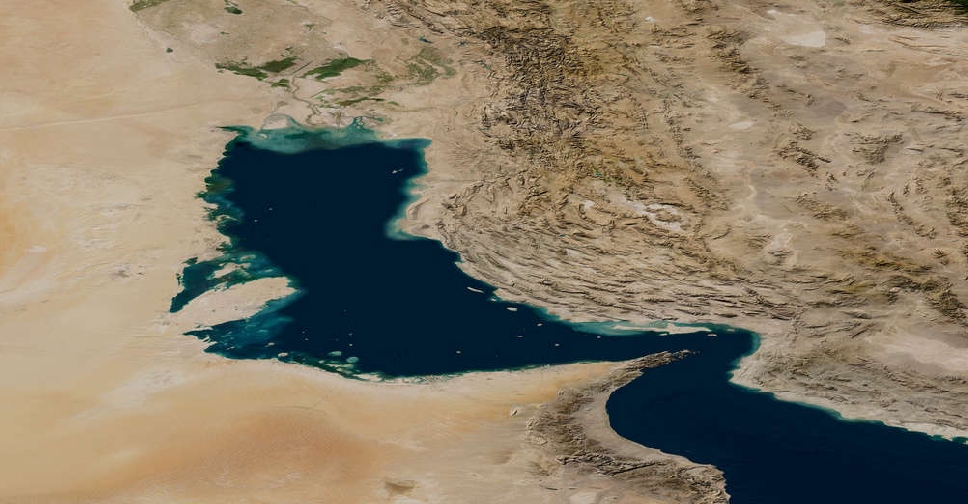
The US military said on Monday it destroyed six Iranian small boats and intercepted Iranian cruise missiles and drones as Tehran sought to thwart a new US naval effort to open shipping through the Strait of Hormuz.
US President Donald Trump launched the operation called Project Freedom on Monday as he sought to wrest control of the critical waterway from Iran, which effectively closed the Strait of Hormuz after the US and Israel started the conflict on February 28.
Iran's Foreign Minister Abbas Araqchi said Monday's events showed there was no military solution to the crisis. He said peace talks were progressing with Pakistan's mediation while warning the US and the UAE against being drawn into a "quagmire by ill-wishers".
Iran's state TV network said military officials had confirmed they attacked the UAE in response to what they referred to as the "US military's adventurism".
"Project Freedom is Project Deadlock," he wrote on social media.
"The IRGC has launched multiple cruise missiles, drones, and small boats at ships we are protecting. We have defeated each and every one of those threats through the clinical application of defensive munitions," said US Admiral Brad Cooper, the head of Central Command.
Cooper said he "strongly advised" Iranian forces to remain well clear of US military assets as Washington launches the operation, which he said involved 15,000 US troops, US Navy destroyers, over 100 land- and sea-based aircraft, and undersea assets.
"The US commanders who are on the scene have all the authorities necessary to defend their units and to defend commercial shipping," he said.
A South Korean ship was hit by an explosion in the Strait of Hormuz on Monday, but Trump remarked in a social media post that the South Korean ship was not part of the operation, and perhaps it should join US efforts to protect ship movements near Iran. Trump estimated the US had sunk seven Iranian fast boats.
The US operation to unblock the Strait of Hormuz involved multiple steps, including first clearing a pathway of Iranian mines.
The US then demonstrated the route's safety earlier on Monday by sending two US-flagged commercial ships through the strait.
Iran's Revolutionary Guards said no commercial vessels had crossed the strait in the past few hours, and that US claims to the contrary were false. Iranian state media also denied reports that the US had sunk Iranian vessels.
The operation is Trump's latest effort to force an end to the disruption of international energy supplies caused by Iran's blockade of the strait, which carried a fifth of global oil and liquefied natural gas before the war.
Cooper said the US military was encouraging vessels to travel through the passageway despite Iranian threats to use military force that have effectively left craft from 87 countries stranded in the Gulf.
"Over the last 12 hours, we've reached out to dozens of ships and shipping companies to encourage traffic flow through the strait," Cooper said.
The Iranian threat has left many ships stranded in the Gulf. Some 805 commercial vessels, including fuel and chemical tankers, container ships, auto carriers, and bulk ships, have sent an automatic identification system (AIS) signal from within the Gulf during the last 24 hours, according to MarineTraffic data.
Cooper said a US blockade of Iran, which prevents ships from going to Iran or departing Iranian territory, also remained in effect and was exceeding expectations.
Iranian authorities also released a map of what they said was an expanded sea area now under their control, extending far beyond the strait to include long stretches of the UAE's coastline.

 Trump says US and Tehran having 'good talks'
 Israel to allow international force into Gaza, Israeli official says
 Saudi Arabia reaffirms right to defend its security against drone attacks
 UK's Burnham welcomes Zelenskyy as first foreign visitor
 Philippines' Marcos puts anti-graft campaign at centre of address to Congress