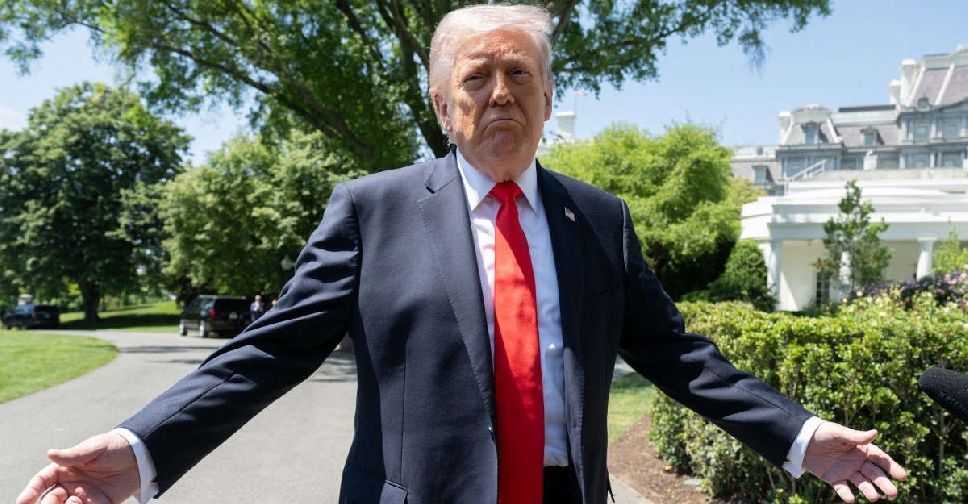
US President Donald Trump said on Friday he was not satisfied with the latest Iranian proposal for talks on the war, while Iran's foreign minister said Tehran was ready for diplomacy if the United States changes its approach.
"They want to make a deal, but ... I'm not satisfied with it," Trump told reporters as he left the White House on a trip to Florida, adding that the Iranian leadership was "very disjointed" and split into two or three groups.
Trump also said the United States would not end its confrontation with Iran early "and then have the problem arise in three more years."
Trump's comments came after Iranian state media and a Pakistani official said Iran had submitted its latest proposal for negotiations since the announcement of a ceasefire on April 8, raising some hope that a deadlock in efforts to end the war might be broken.
He praised Pakistan's mediation efforts, saying negotiations by phone were continuing.
"They've made strides, but I'm not sure if they ever get there," Trump said. "They're asking for things that I can't agree to."
Global oil prices, which remain well above $100 a barrel, had eased following news of the Iranian proposal.
Iran's Foreign Minister Abbas Araqchi said his country was ready to pursue diplomacy if the United States changes what he called its "excessive approach, threatening rhetoric and provocative actions."
However, Araqchi added in a post on his Telegram channel that "Iran's armed forces remained ready to defend the country against any threat."
REPORTS ON PLANS FOR NEW STRIKES
The war, which began with US and Israeli strikes on Iran on February 28, has led to the deaths of thousands of people while the closure of the Strait of Hormuz has caused massive disruption to energy markets, choking off 20 per cent of the world's oil and gas supplies.
The blockade of the vital sea channel has also increased concerns about the possibility of a wider economic downturn.
The US Navy is blocking exports of Iranian crude oil, and on Friday the US Treasury told shippers that they risked sanctions if they paid tolls to Iran to pass through the Strait.
A ceasefire has been in place since April 8 but reports that Trump was to be briefed on plans for new military strikes to compel Iran to negotiate had pushed oil prices up to a four-year high at one point on Thursday.
Iran has activated air defences and plans a wide response if attacked, having assessed that there will be a short, intensive US strike, possibly followed by an Israeli attack, two senior Iranian sources told Reuters on condition of anonymity.
CHINA APPEALS OVER STRAIT CLOSURE
Trump has repeated that Iran will not be allowed to have a nuclear weapon, and that the price of gasoline - an important concern for his Republican Party before midterm elections in November - would drop sharply as soon as the war ended.
Iran has long demanded that the United States acknowledge its right to enrich uranium, which Tehran says it seeks only for peaceful purposes but which Western powers say is aimed at building nuclear weapons.
Asked about his options, Trump said on Friday: "Do we want to go and just blast the hell out of them and finish them forever? Or do we want to try and make a deal?"
Asked if he wanted to blast the hell out of them, Trump said: "On a human basis, I prefer not."
China's UN ambassador, Fu Cong, said on Friday it was an urgent necessity to maintain the ceasefire and that the Strait of Hormuz needed to be reopened as quickly as possible.
He said he was sure the Strait would be high on the agenda if it is still closed when Trump travels to China this month.
STRAINED RELATIONS IN EUROPE
Meanwhile, US relations with its traditional allies were further strained over Iran on Friday, as the United States announced it was withdrawing 5,000 troops from Germany.
Trump had threatened a drawdown over differences with German Chancellor Friedrich Merz, who said on Monday the Iranians were humiliating the United States and that the Americans lacked an exit strategy.
A senior Pentagon official, speaking on condition of anonymity, said recent German comments were "inappropriate and unhelpful."
"The president is rightly reacting to these counterproductive remarks," the official said.

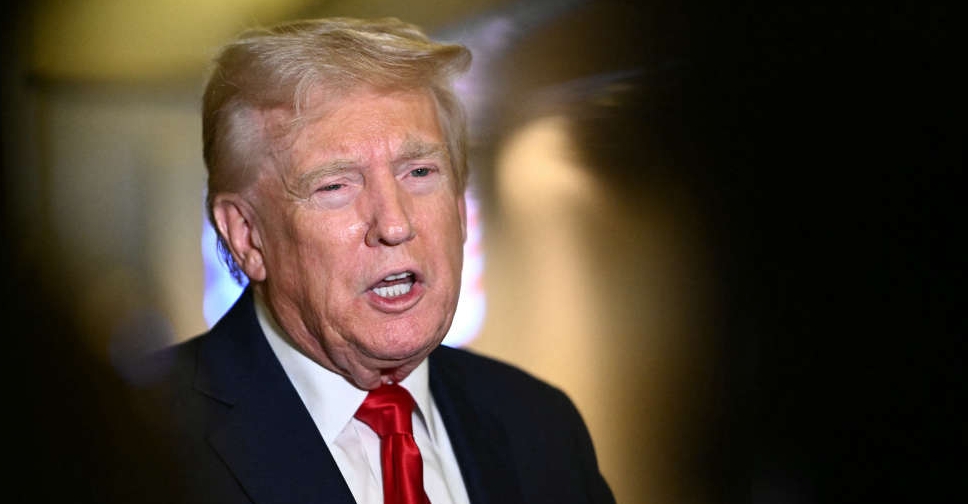 Trump says US and Tehran having 'good talks'
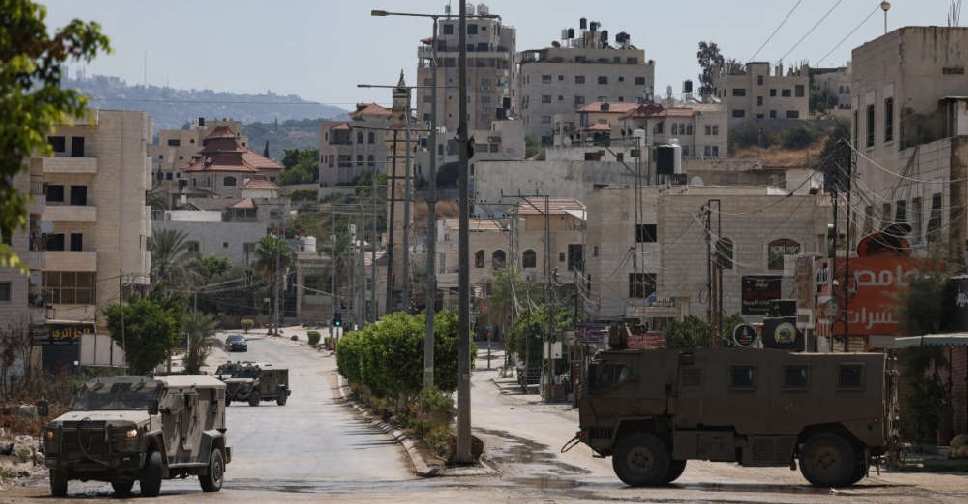 Israel to allow international force into Gaza, Israeli official says
 Saudi Arabia reaffirms right to defend its security against drone attacks
 UK's Burnham welcomes Zelenskyy as first foreign visitor
 Philippines' Marcos puts anti-graft campaign at centre of address to Congress