
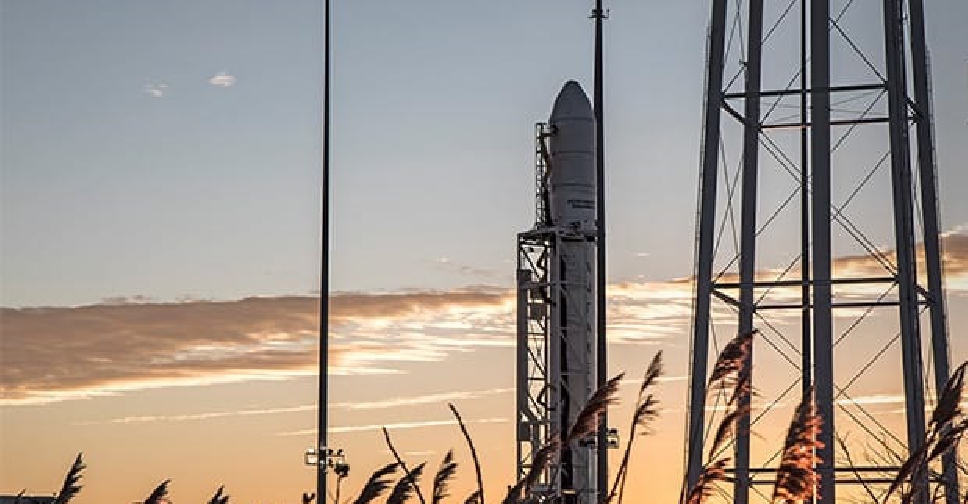
Another milestone has been acheived in the UAE's space sector with the launch of the DhabiSat satellite.
It successfully lifted off on Saturday from the Wallops Flight Facility in the US state of Virginia aboard the Cygnus NG-15 craft on the Antares rocket bound for the International Space Station.
The satellite has been developed by students from Khalifa University's Space Technology and Innovation Centre's Yahsat Lab in collaboration with Northrop Grumman and the UAE Space Agency.
DhabiSat will enable the team to test custom software modules, developed in-house for the Attitude Determination and Control Subsystem.
Its high-res camera can capture images at 12.6 metres per pixel spatial resolution on ground, from an altitude of 450 km.
The satellite also has the potential to improve the efficiency of future CubeSats.
"The launch of DhabiSat is another remarkable achievement for the UAE, Khalifa University and the partners, marking a major milestone for the UAE’s space sector that will have locally-qualified, and trained manpower equipped by academic institutions within the country," said Dr Arif Sultan Al Hammadi, Executive Vice-President, Khalifa University of Science and Technology.
"This CubeSat was entirely designed and developed by students with support from our partners, and demonstrates another example of Khalifa University’s overarching strategy to develop space scientists and engineers who will take the UAE forward in terms of technological progress.
"We believe DhabiSat will stand testimony to our commitment to developing dedicated human capital through our exclusive academic programs, our research center KUSTIC and with the support of our collaboration partners."
Khalifa University’s first CubeSat MYSat-1, conceptualised, designed, integrated, tested and operated as part of the Master’s Concentration in Space Systems and Technologies programme, was deployed in February 2019.
It carried an experimental coin cell battery, based on the technology developed at Khalifa University along with a VGA camera integrated at the Yahsat Space Lab based on commercial off-the-shelf (COTS) components.
.
— جامعة خليفة للعلوم والتكنولوجيا (@KhalifaUni) February 20, 2021
نبارك لقيادة وشعب دولة الإمارات العربية المتحدة الإطلاق الناجح لـ #ظبي_سات، القمر الاصطناعي المصغر الذي تم تصميمه وتطويره من قبل طلبة #جامعة_خليفة وبدعم من @yahsatofficial و @northropgrumman
و @uaespaceagency
إنجاز جديد يعزز من مكانة دولة #الإمارات في قطاع الفضاء. pic.twitter.com/t4B32zDy90


 Abu Dhabi identifies over 40 modern heritage sites
 Distribution of aid from UAE's Saqr Humanitarian Ship begins in Gaza
 Dubai to expand bus and taxi lanes as public transport ridership grows by 7.4%
 Emir of Qatar welcomed by UAE President on visit to Abu Dhabi
 UAE, Egypt Foreign Ministers discuss Gaza peace plan
 UAE, Pakistan leaders discuss boosting economic ties
 UAE, Bosnia FMs discuss strengthening bilateral relations
 H.H. Sheikh Mohammed launches campaign to rescue 5 million children from hunger
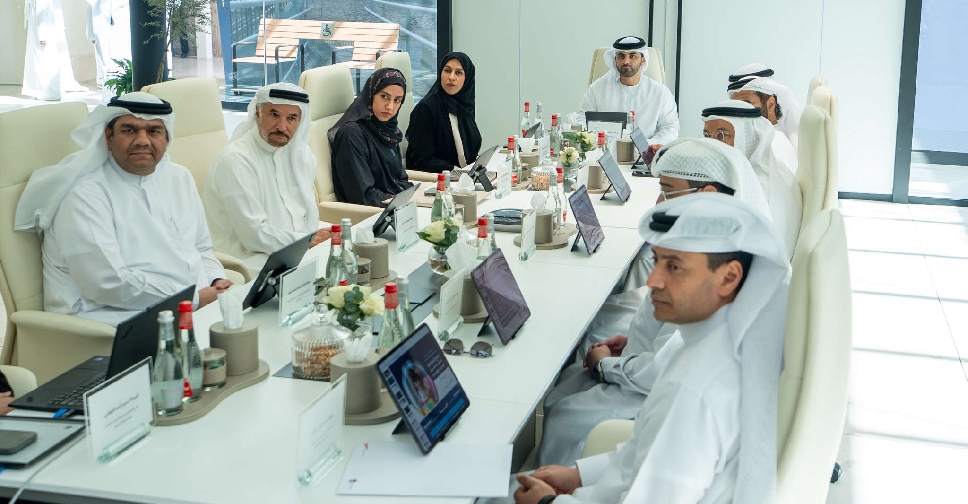 Dubai advances measures to support people of determination
 Abu Dhabi Crown Prince to lead UAE delegation at AI Impact Summit in India
 Over 14 million Captagon pills, hidden in grain sacks, seized in UAE–Kuwait operation
 Remote learning on Fridays during Ramadan for UAE public schools
 UAE clarifies enrollment rules for British curriculum schools
 UAE announces temporary road closures in Al Dhaid
 Umm Al Emarat aid ship sets sail for Gaza Strip
 UAE announces Ramadan working hours for private sector
 H.H. Sheikh Hamdan highlights nation’s defence vision at naval college ceremony
 Members of UAE's National Identity Committee unveiled
 Ramadan working hours confirmed for UAE public sector
 Kazakhstan crowned champions of UAE SWAT Challenge 2026

