
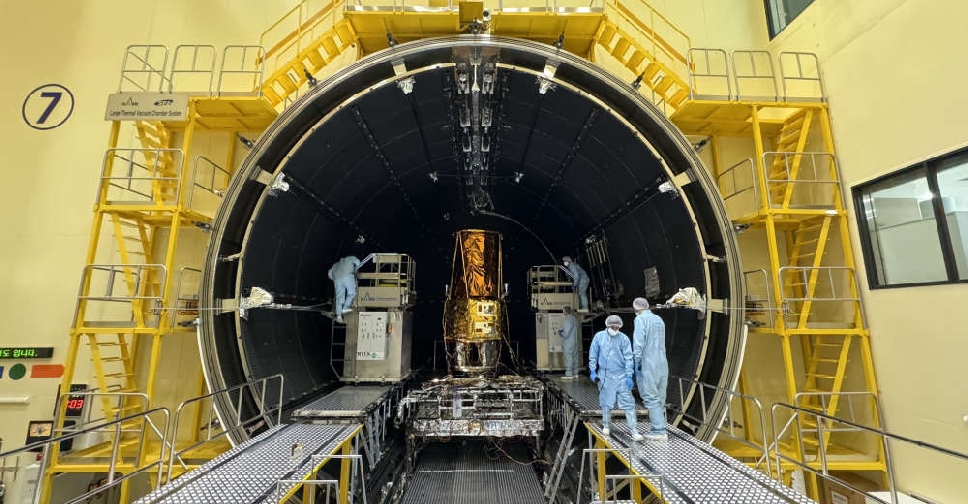
The Mohammed bin Rashid Space Centre (MBRSC) has begun environmental testing on MBZ-SAT satellite, after transporting it to the Korea Aerospace Research Institute (KARI) testing facility.
The tests, which will last around two months, aim to ensure that the satellite can withstand the challenges of launch and operation in space.
A 36-member team of engineers from MBRSC is currently in South Korea overseeing the preparations.
MBZ-SAT, which is fully developed and built by a team of Emirati engineers, is scheduled for launch no earlier than October 2024.
Following the successful completion of the environmental testing phase, MBZ-SAT will be ready for transport to the United States, where following its arrival, it will be prepared for the scheduled launch.
The satellite will be launched on a SpaceX Falcon 9 rocket during the Transporter-12 Rideshare mission.
Key highlights from the commencement of environmental testing on MBZ-SAT, after transporting it to the Korea Aerospace Research Institute (KARI) testing facility. This phase includes Thermal Vacuum (TVAC), Vibration, Acoustic, and Mass Properties testing. pic.twitter.com/ajKdEgqSrs
— MBR Space Centre (@MBRSpaceCentre) June 13, 2024
Environmental testing phases
The satellite’s environmental testing sequence will commence with Thermal Vacuum (TVAC) testing, where it will be subjected to simulated space conditions of extreme temperature and vacuum.
Following TVAC, the satellite will undergo Vibration testing, which assesses its structural integrity and ability to withstand the mechanical stresses encountered during launch and operation.
Subsequently, the satellite will undergo Acoustic testing, replicating the intense sound pressure levels experienced during launch, to ensure it can withstand such conditions without damage.
Finally, Mass Properties testing will be conducted to precisely measure and characterise the satellite's mass distribution, aiding in its accurate deployment and trajectory calculations in space. This sequential testing approach ensures thorough evaluation of the satellite's readiness for safe and reliable operation in space.
Most advanced satellite in the region
MBZ-SAT, equipped with one of the region's most powerful cameras, can capture high-resolution images of areas smaller than a square metre, meeting the increasing commercial demand for such images and establishing the UAE as a centre of high-tech space technology development and innovation.
The MBRSC will offer rapid turnaround of captured data round-the-clock, sharing it with users globally through an advanced system.
This imagery solution can support a wide variety of uses within mapping and analysis, environmental monitoring, navigation, infrastructure management and disaster relief efforts.

 UAE condemns drone attack on Saudi oil pipeline
 UAE allocates $10 million for humanitarian response in Haiti
 AD Crown Prince, Modi discuss strengthening UAE-India ties
 UAE future leaders take part in Gaza aid operations in Egypt
 UAE rescue team locates 10 missing people in Nepal
 UAE President concludes state visit to Germany
 H.H. Sheikh Mohamed, Merkel highlight strong UAE-Germany ties
 Abu Dhabi Crown Prince arrives in India for BRICS Summit
 NCM clarifies El Nino reports, reassures public on UAE weather
 H.H. Sheikh Mohamed meets UAE students studying in Germany
 UAE foils two cross-border people-smuggling operations
 Sheikh Abdullah holds talks with Kuwait and Bahrain's FMs
 UAE to invest 40 billion euros in Germany to deepen economic ties
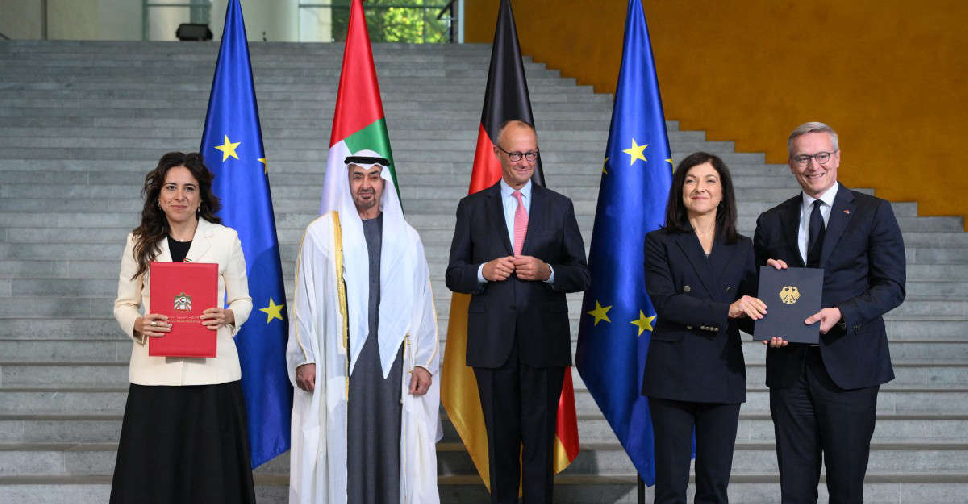 UAE, Germany announce new agreements and strategic dialogue
 UAE affirms commitment to relations with all countries
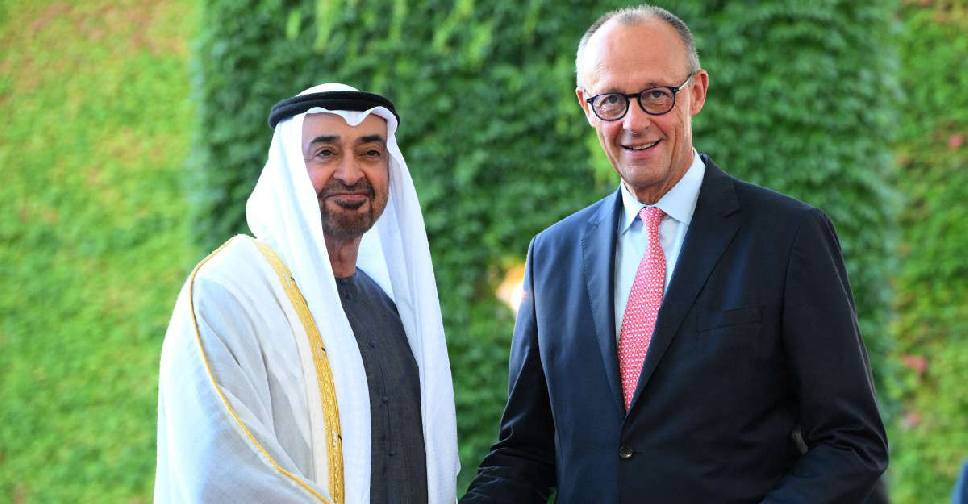 UAE President, German Chancellor reaffirm strategic partnership
 H.H. Sheikh Mohamed highlights UAE-Germany ties at Bundestag
 UAE to host World Fire Congress 2028
 Abu Dhabi Crown Prince to lead UAE delegation at 18th BRICS Summit
 Dubai unveils school framework to coach students for jobs of the future

