
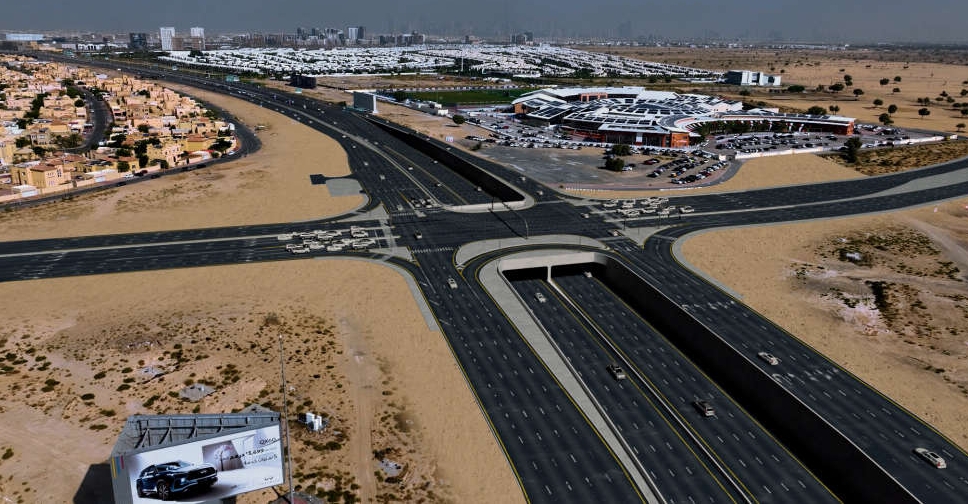
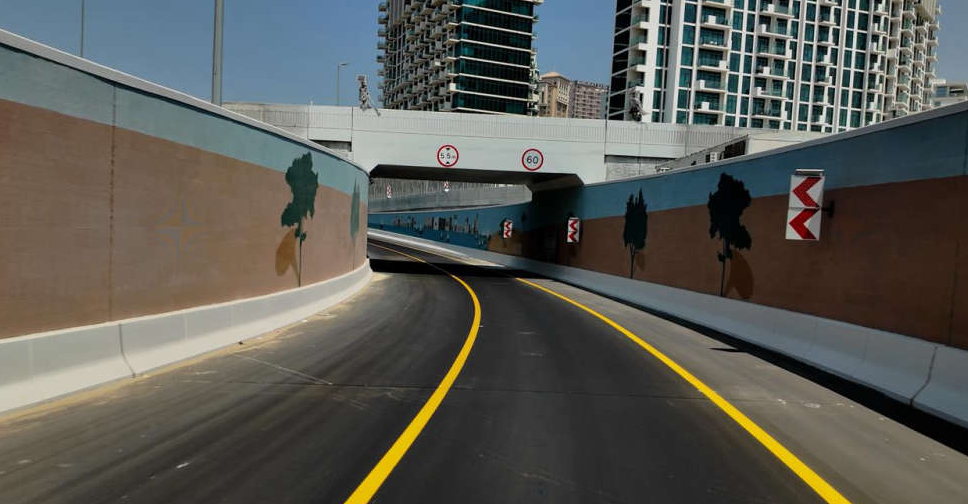
Dubai’s Roads and Transport Authority (RTA) has opened an 800-metre four-lane underpass that will cut travel time between Sheikh Mohammed bin Zayed and Al Khail roads by 61 per cent, dropping from 9.7 minutes to 3.8 minutes.
It's part of the Umm Suqeim Street Development Project that aims to enhance connectivity between four strategic corridors - Sheikh Zayed Road, Al Khail Road, Sheikh Mohammed bin Zayed Road and Emirates Road.
Making the announcement on Sunday, Mattar Al Tayer, Director General, Chairman of the Board of Executive Directors of RTA, said the underpass will "increase the capacity of Umm Suqeim Street to 16,000 vehicles per hour in both directions and improve traffic flow".
It will also "serve several residential and development areas, including Al Barsha South 1, 2, and 3, Dubai Hills, Arjan, and Dubai Science Park, home to a population of over one million".
Dubai’s Roads and Transport Authority opens an 800-metre tunnel with four lanes in each direction, as part of the Umm Suqeim Street Development Project, which extends from the intersection with Al Khail Road to the intersection with Sheikh Mohammed bin Zayed Road. The project… pic.twitter.com/eUyyPb0kyh
— Dubai Media Office (@DXBMediaOffice) August 3, 2025
Al Taye added that “the Umm Suqeim Street Development Project extends from the intersection with Al Khail Road to the intersection with Sheikh Zayed Road, covering a distance of 4.6 km". It also "included upgrading the intersection of Umm Suqeim Street with Al Barsha South Street, near Kings’ School and "a signalised surface-level intersection".
He added that the “completed project is part of a comprehensive plan to develop the Umm Suqeim–Al Qudra corridor, which extends from the intersection with Jumeirah Street to the intersection with Emirates Road, spanning a total of 16 km".
It is "considered one of the most important strategic projects for developing transverse east–west roads to enhance connectivity with vertical north–south roads".
Deploying smart tech
The RTA used drones to analyse construction data using artificial intelligence, enhancing operational efficiency on-site, accelerating decision-making, and providing real-time, highly accurate information.
These technologies also doubled on-site presence, reduced the duration of field surveys by 60 per cent, and improved overall monitoring. Additionally, time-lapse imaging was employed to continuously track construction progress, increasing monitoring efficiency by 40 per cent.

 Sheikh Ahmed bin Rashid Al Maktoum laid to rest
 UAE, partners renew push for Gaza peace plan
 Sheikh Ahmed bin Rashid Al Maktoum passes away; 10-day mourning in Dubai
 Funeral prayer for Sheikh Ahmed bin Rashid to be held on Tuesday
 UAE detects 377 cases of fake Emiratisation in half-year review
 Sheikh Abdullah meets global counterparts at UN
 Abu Dhabi to host UN congress on crime and criminal justice
 Abu Dhabi strengthens greenhouse gas emissions monitoring
 Sharjah Ruler approves 6,700 housing support requests
 Abu Dhabi court secures AED 7.8 million in workers' dues
 Sheikh Abdullah to lead UAE delegation at UN General Assembly
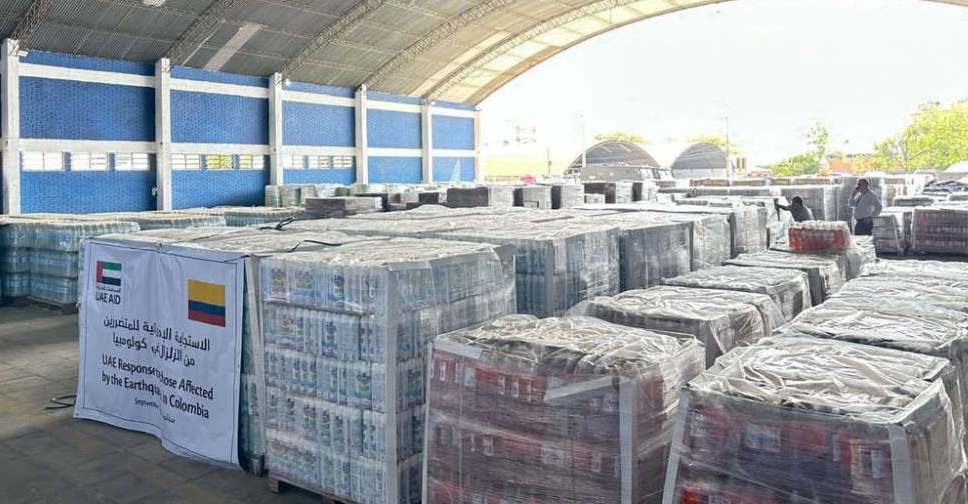 UAE sends humanitarian aid to earthquake-hit Colombia
 UAE calls for global action to combat extremism and hate speech
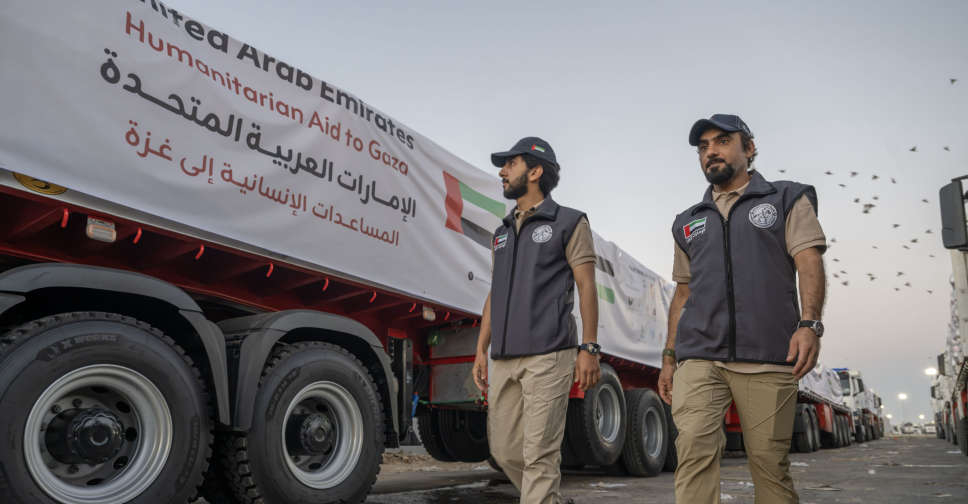 Four UAE aid convoys deliver 781 tonnes of supplies to Gaza
 Etihad Rail launches cargo service from Fujairah to Industrial City of Abu Dhabi
 H.H. Sheikh Hamdan announces new Acting Director General of Dubai Ruler's Court
 RTA completes works on Oud Metha, Al Asayel Streets development project
 UAE President, Indian PM discuss stronger bilateral ties
 Dubai Police warns of fake online adverts selling Global Village tickets

