
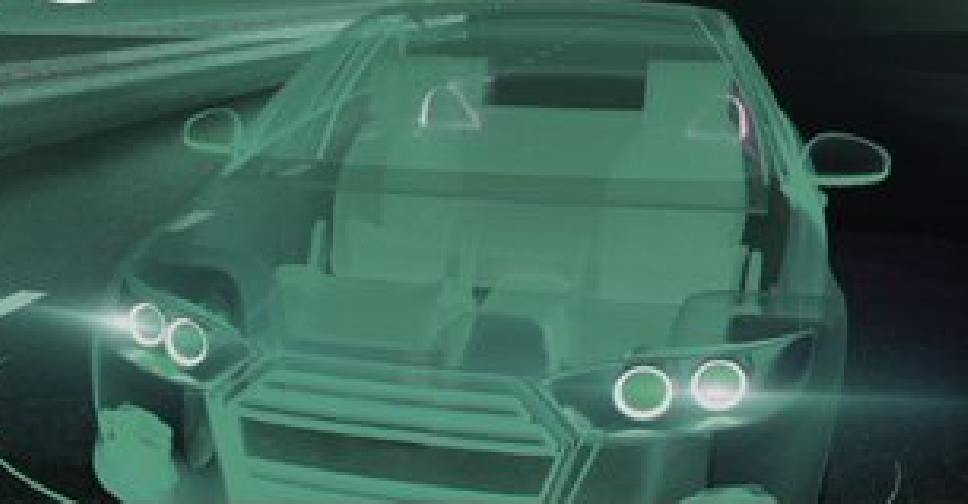
Trial operations of driverless vehicles have been scheduled to get underway in Abu Dhabi during the last quarter of 2021.
The Department of Municipalities and Transport (DMT) has signed a cooperation agreement with Bayanat, a G42 company.
Under the deal, DMT and Bayanat will cooperate in the autonomous car trials to transport passengers in the emirate.
This agreement supports the Department's smart transport strategy and aims to develop innovative mobility solutions through its Integrated Transport Centre (ITC).
ITC is responsible for establishing the necessary infrastructure for the self-driving vehicles within an integrated and sustainable system.
.@AbuDhabiDMT has partnered with Bayanat, a G42 company, to run trial operations of driverless vehicles in #AbuDhabi from Q4 of 2021. pic.twitter.com/Ufr0bu8f4G
— مكتب أبوظبي الإعلامي (@ADMediaOffice) March 23, 2021
Commenting on the signing of the agreement, Abdullah Al Marzouqi, Director General of ITC, said the launch provides an opportunity for the private sector, a vital strategic partner in the local development process, to participate in the smart transport industry.
The first phase involves three vehicles operating on Yas Island at pick-up and drop-off points for hotels, restaurants, shopping malls and offices.
While the second phase will involve more than 10 vehicles in multiple locations across Abu Dhabi.
The service will be free of cost in both phases, and will be provided from 8:00 am to 8:00 pm, with the presence of a safety officer in the driving seat, to facilitate the operation and ensure the highest security and safety standards.
Bayanat will provide comprehensive support to the programme, including vehicle safety testing, central security and operation management platform, as well as overseeing the autonomous vehicle operations for compliance with traffic laws and its executive regulations in the UAE.
The cars are able to sense the surrounding environment and navigate without human intervention.
They rely on mapping algorithms and data obtained from multiple built-in sensors to determine the path of the road.
Typical sensors include technical systems similar to radars, and a stereoscopic vision system, Geographic Positioning System (GPS), Optical Object Recognition System, and Real-time Positioning System.
The two parties will also cooperate within the framework of the signed agreement to explore trends in the autonomous vehicle industry, the latest technologies and innovative solutions in the field.


 Emir of Qatar welcomed by UAE President on visit to Abu Dhabi
 UAE, Pakistan leaders discuss boosting economic ties
 UAE, Bosnia FMs discuss strengthening bilateral relations
 H.H. Sheikh Mohammed launches campaign to rescue 5 million children from hunger
 Dubai advances measures to support people of determination
 Abu Dhabi Crown Prince to lead UAE delegation at AI Impact Summit in India
 Over 14 million Captagon pills, hidden in grain sacks, seized in UAE–Kuwait operation
 Remote learning on Fridays during Ramadan for UAE public schools
 UAE clarifies enrollment rules for British curriculum schools
 UAE announces temporary road closures in Al Dhaid
 Umm Al Emarat aid ship sets sail for Gaza Strip
 UAE announces Ramadan working hours for private sector
 H.H. Sheikh Hamdan highlights nation’s defence vision at naval college ceremony
 Members of UAE's National Identity Committee unveiled
 Ramadan working hours confirmed for UAE public sector
 Kazakhstan crowned champions of UAE SWAT Challenge 2026
 H.H. Sheikh Mohammed attends final day of UAE SWAT Challenge
 UAE chairs Arab League emergency meeting on Israeli settlement expansion
 UAE cracks down on unlicensed domestic worker recruitment platforms
 UAE strongly condemns school shooting in Canada

