
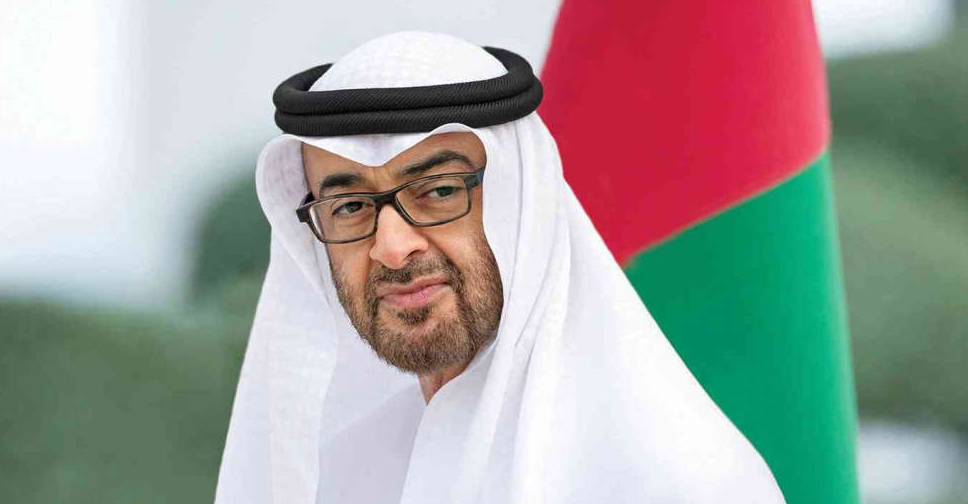
His Highness Sheikh Mohamed bin Zayed Al Nahyan, Crown Prince of Abu Dhabi and Deputy Supreme Commander of the UAE Armed Forces, has given a grant to the Harvard Stem Cell Institute to advance research into Type 1 diabetes.
The grant offered to the Institute's Douglas Melton Laboratory will help fund research focusing on accelerating gene editing approaches for pancreatic beta cell replacement therapy.
The initiative is part of Sheikh Mohamed's global health initiative "Reaching the Last Mile," which works to eradicate diseases and supports the development of innovative research and technology.
The latest collaboration will also provide an opening to two Emirati research fellows to join the Douglas Melton Lab, with the opportunity to take part in research and work to develop a breakthrough cure for diabetes.
"The promising results we’ve seen with stem cell-derived islet cells could deliver a life-changing therapy for people who suffer from the relentless life-long burden of type 1 diabetes," said Dr. Douglas Melton, who is the Xander University Professor of Stem Cell and Regenerative Biology at Harvard University and the Co-Director of the Harvard Stem Cell Institute.
Dr. Fatima Al Kaabi, Executive Director of the Abu Dhabi Bone Marrow Transplant programme at the Abu Dhabi Stem Cell Centre, stated, "The opportunity for two Emiratis to join the Melton Lab as research fellows will be a cultural and academic enrichment to all those involved. For the selected individuals to not only partake in this research, but also learn from the Lab and be under the sponsorship of a principal investigator will be an invaluable experience."
According to the World Health Organisation (WHO), about 422 million people worldwide have diabetes, and 1.6 million deaths are directly attributed to diabetes each year.
The number of cases and the prevalence of diabetes have been steadily increasing over the past few decades.
Type 1 diabetes is caused by the absence of insulin-producing beta cells, which are destroyed by the immune system through mechanisms that are still not known.
While patients can manage diabetes, there is currently no cure.
The first milestone project to be funded under the commitment of Sheikh Mohamed will be making beta cells that evade immune elimination.
Further milestones include identifying the immune cells responsible for rejecting transplanted stem cell (SC)-derived beta cells, which will allow the ability to pinpoint the immune cells that start and continue the immune attack and devise ways to eliminate them, and finally, modelling SC-islets for human transplantation.
This ambitious programme will allow SC-islets to survive and function for years following transplantation into diabetics, effectively curing them of the disease.


 No fire or injuries after drone interception in Dubai Marina
 One dead, four injured in Habshan gas facility incident
 UAE approves new oral obesity treatment
 Dubai to roll out EV superchargers across parks, beaches
 Twelve injured by falling debris in Abu Dhabi's Ajban area
 EGA says Al Taweelah output could take a year to recover
 40 million take part in Arab Reading Challenge, says H.H. Sheikh Mohammed
 UAE intercepts 22 missiles and 47 drones on Friday
 Fire breaks out at Abu Dhabi gas facility due to fallen debris
 Dubai Police warns against dangerous driving habits
 UAE air forces respond to new wave of missile, drone threats on Friday
 Dubai churches, temples announce temporary closure until further notice
 UAE supports Bahrain resolution on Strait of Hormuz
 Some UK education boards cancel IGCSE, A-level exams for UAE
 UAE expresses solidarity with Pakistan and Afghanistan over devastating floods
 UAE President and King of Jordan discuss regional developments
 UAE intercepts 19 ballistic missiles and 26 drones on Thursday
 UAE, seven other nations strongly condemn Israel's death penalty law

