
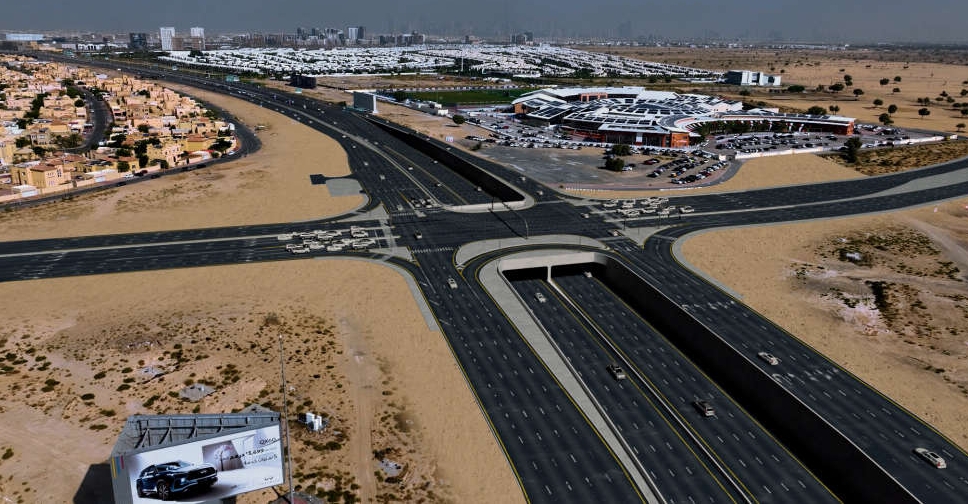
Dubai’s Roads and Transport Authority (RTA) has opened an 800-metre four-lane underpass that will cut travel time between Sheikh Mohammed bin Zayed and Al Khail roads by 61 per cent, dropping from 9.7 minutes to 3.8 minutes.
It's part of the Umm Suqeim Street Development Project that aims to enhance connectivity between four strategic corridors - Sheikh Zayed Road, Al Khail Road, Sheikh Mohammed bin Zayed Road and Emirates Road.
Making the announcement on Sunday, Mattar Al Tayer, Director General, Chairman of the Board of Executive Directors of RTA, said the underpass will "increase the capacity of Umm Suqeim Street to 16,000 vehicles per hour in both directions and improve traffic flow".
It will also "serve several residential and development areas, including Al Barsha South 1, 2, and 3, Dubai Hills, Arjan, and Dubai Science Park, home to a population of over one million".
Dubai’s Roads and Transport Authority opens an 800-metre tunnel with four lanes in each direction, as part of the Umm Suqeim Street Development Project, which extends from the intersection with Al Khail Road to the intersection with Sheikh Mohammed bin Zayed Road. The project… pic.twitter.com/eUyyPb0kyh
— Dubai Media Office (@DXBMediaOffice) August 3, 2025
Al Taye added that “the Umm Suqeim Street Development Project extends from the intersection with Al Khail Road to the intersection with Sheikh Zayed Road, covering a distance of 4.6 km". It also "included upgrading the intersection of Umm Suqeim Street with Al Barsha South Street, near Kings’ School and "a signalised surface-level intersection".
He added that the “completed project is part of a comprehensive plan to develop the Umm Suqeim–Al Qudra corridor, which extends from the intersection with Jumeirah Street to the intersection with Emirates Road, spanning a total of 16 km".
It is "considered one of the most important strategic projects for developing transverse east–west roads to enhance connectivity with vertical north–south roads".
Deploying smart tech
The RTA used drones to analyse construction data using artificial intelligence, enhancing operational efficiency on-site, accelerating decision-making, and providing real-time, highly accurate information.
These technologies also doubled on-site presence, reduced the duration of field surveys by 60 per cent, and improved overall monitoring. Additionally, time-lapse imaging was employed to continuously track construction progress, increasing monitoring efficiency by 40 per cent.

 Emir of Qatar welcomed by UAE President on visit to Abu Dhabi
 UAE, Pakistan leaders discuss boosting economic ties
 UAE, Bosnia FMs discuss strengthening bilateral relations
 H.H. Sheikh Mohammed launches campaign to rescue 5 million children from hunger
 Dubai advances measures to support people of determination
 Abu Dhabi Crown Prince to lead UAE delegation at AI Impact Summit in India
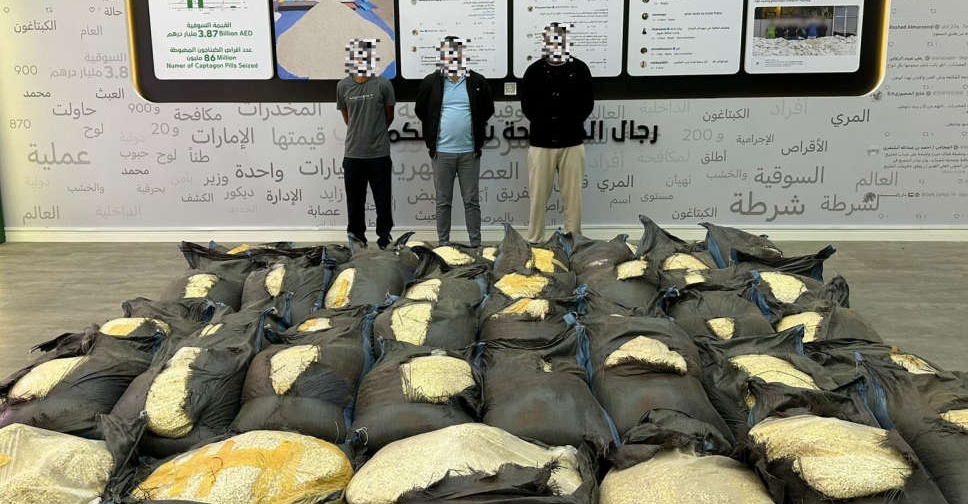 Over 14 million Captagon pills, hidden in grain sacks, seized in UAE–Kuwait operation
 Remote learning on Fridays during Ramadan for UAE public schools
 UAE clarifies enrollment rules for British curriculum schools
 UAE announces temporary road closures in Al Dhaid
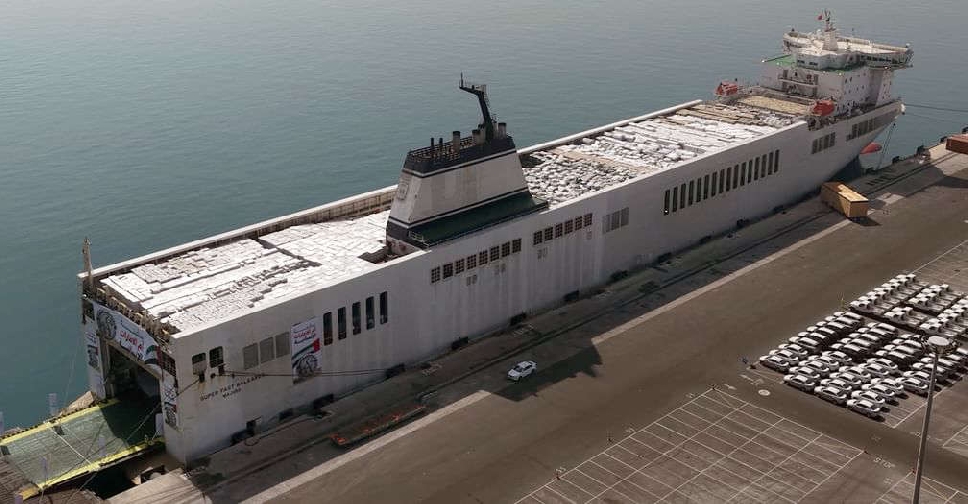 Umm Al Emarat aid ship sets sail for Gaza Strip
 UAE announces Ramadan working hours for private sector
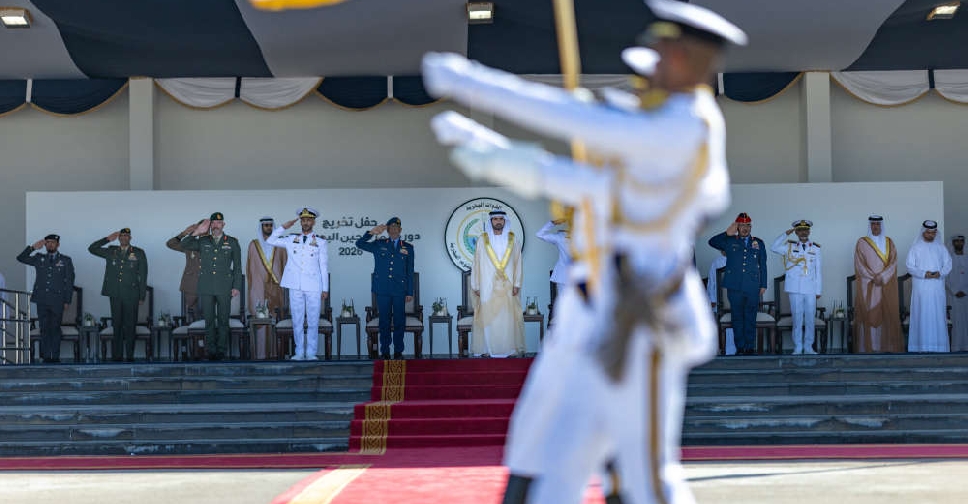 H.H. Sheikh Hamdan highlights nation’s defence vision at naval college ceremony
 Members of UAE's National Identity Committee unveiled
 Ramadan working hours confirmed for UAE public sector
 Kazakhstan crowned champions of UAE SWAT Challenge 2026
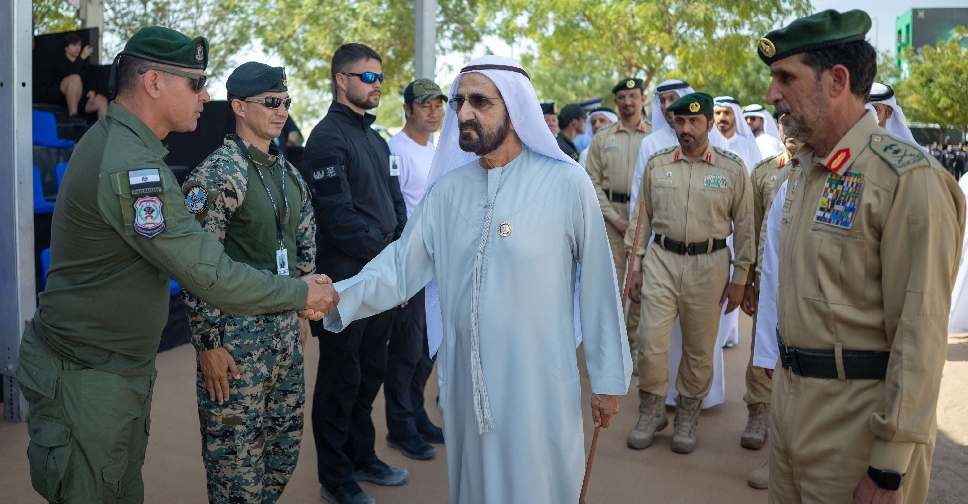 H.H. Sheikh Mohammed attends final day of UAE SWAT Challenge
 UAE chairs Arab League emergency meeting on Israeli settlement expansion
 UAE cracks down on unlicensed domestic worker recruitment platforms
 UAE strongly condemns school shooting in Canada

